Показанные сообщения отсортированы по релевантности запросу "mg". Сортировать по дате Показать все сообщения
Показанные сообщения отсортированы по релевантности запросу "mg". Сортировать по дате Показать все сообщения
вторник, 25 февраля 2025 г.

среда, 5 декабря 2018 г.
Useful properties of ostrich eggs
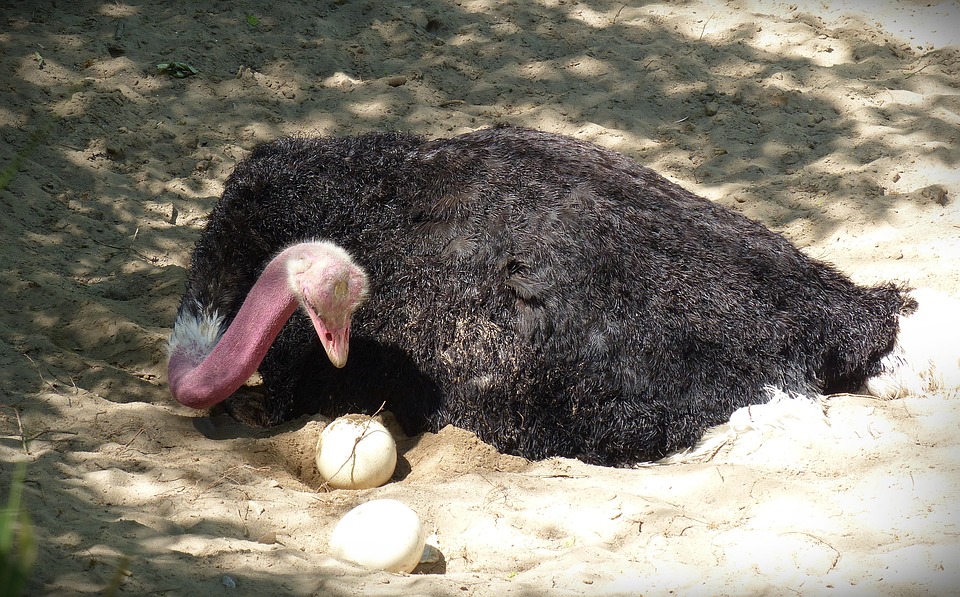
Useful properties of ostrich eggs
Over the past few years, ostrich eggs have become in demand among the population of Eurasia and America. Some people eat them to be fashionable, and others eat them because of their useful properties. You can buy such a delicacy on special ostrich farms, the number of which grows over the years in almost every city in Europe and Asia. This is what my blog is about today.
Only unfertilized eggs are used for food. Ostriches, as a rule, lay eggs in the warm season, so in winter this delicacy is almost impossible to purchase.
Ostrich eggs have an average weight of 1 to 1.5 kg, which is 30-35 times more than the usual chicken egg. The color of the shell depends on the breed of the bird and varies from pinkish-yellow (in Nanda ostriches) to black-green (in Emus ostriches). The protein has a transparent color, similar to that of other birds, and the yolk is a much richer, brighter yellow.
Like any other eggs, ostrich eggs are rich in protein and fats, which are primarily involved in the building of cells in any organ of the human body. Unlike normal chicken eggs, ostrich eggs are completely devoid of harmful substances, because ostriches are fed with high-quality food and they will not consume contaminated food. A 1600 g egg contains 1 kg of protein and 330 g of fat. One adult person for consumption of the daily rate of the main food components needs 100 g of such eggs.
In addition to the main organic substances, ostrich eggs contain vitamins and minerals. Thus, the average vitamin A content in 1g of an egg is 19 μg, vitamin E – 115-117 μg, vitamin B2 – 2 μg. This is almost 2 times higher than in chicken eggs. Also, ostrich embryos contain potassium (0.5–1 mg per 100 g), phosphorus (1 mg per 100 g), sodium (3 mg per 100 g) and calcium (1.5 mg per 100 g). The calorie content of these eggs is 120-160 kcal per 100g of product, which allows them to be used in various weight-loss programs too.
Ostrich eggs, in addition to their nutritional values, are used as a form of treatment and prevention of certain pathological conditions. Thus, in the cardiovascular system, the positive effect of ostrich eggs is found in the prevention of heart attacks, heart failure, angina pectoris and arrhythmia, atherosclerosis and varicose veins. Ostrich eggs help also to go through the rehabilitation period after the heart attack.
Ostrich eggs are recommended for people with excess weight. Products made from the protein and yolk of this bird allow you to lose weight and keep it off even when the diet is over.
Also, ostrich eggs cleanse the intestines and human blood from toxins and free radicals.
суббота, 1 марта 2025 г.
среда, 5 декабря 2018 г.
Beware of nitrates in food!
Beware of nitrates in food!
Imagine a summer morning in a picturesque village. You wake up from the gentle touch of the sun’s rays, the ceremonial crowing of the neighbor’s rooster welcomes you, and your legs are already rushing out of the house towards a new day …
How great it all is! The garden in the backyard is full of bright red cherries, and the leaves of the lettuces and parsley are green … This is a vitamin paradise!
This is what we have in our minds, but, unfortunately, we are led to disappointment. The culprit? Tiny molecules of nitrates … This is my post today.
What are nitrates?
Nitrates are compounds (salts) of metals which contain a residue of nitric acid (HNO3). In solutions, nitrates are, as a rule, represented by negatively charged particles — nitrate anions (NO3–), which contain three oxygen atoms and one nitrogen atom.
It is nitrates that are the main form in which mineral nitrogen is absorbed by plants from the soil. After absorption, nitrates are included in reduction reactions, the purpose of which is to obtain ammonium ions (NH4 +). A simplified diagram of this process is as follows:
NO3- → NO2- → NH4 +
Why precisely ammonium? It’s simple. Recall that proteins, one of the most important classes of organic compounds, are composed of amino acids. Amino acids, in turn, are nitrogen-containing molecules. To build an amino acid and, accordingly, protein, the body needs nitrogen. It so happens that nitrates containing nitrogen cannot be involved in the synthesis of amino acids, but ammonium can. So the plant has to first absorb the nitrates and then turn them into ammonium. Alas, this transformation is not an instantaneous matter; therefore, nitrates can accumulate in the plant’s body, and we, in turn, eat them.
Which are the dangerous nitrates?
Approximately 70% of all nitrates enter the human body from food composed of plants (fresh or canned vegetables) and about 20% with water (especially water rich in nitrates from wells; deep-well drilled water contains much fewer nitrates). The remaining 10% of nitrates a person receives is from animal products and pharmacological preparations. The permissible daily intake of nitrates for a person is set at 5 mg per 1 kg of body weight.
Once in the human body, nitrates are converted into nitrites – particularly dangerous anions that oxidize hemoglobin iron. Oxidized hemoglobin (methemoglobin) is unable to transport oxygen. As a result, oxygen deficiency of tissues and organs (hypoxia) develops and in particular, pernicious hypoxic state for cells of the nervous tissue and heart muscle. The accumulation of 20% methemoglobin in the blood is dangerous to our life. A prolonged continuous flow of nitrates into the human body can cause destructive changes in the heart, kidney damage, and an increase in the thyroid gland can be observed (nitrates reduce iodine). Nitrates contribute to the development of pathogenic intestinal microflora, as a result of which intoxication states develop. Particularly dangerous is the conversion of nitrates and nitrites to nitroso compounds, which are characterized by a strong hepatotoxic and carcinogenic effect and can provoke the development of cancer of the liver, mammary glands, stomach and even leukemia.
How to live with them?
After the information above, it is somehow even scary to eat any products that are plant-based. But still, plants remain the most important suppliers of vitamins, minerals and bioflavonoids, so excluding them from our daily diet is very unwise. What then should we do?
It should be noted that plants, according to the localization of the nitrate reduction reaction, are divided into three main groups. Representatives of the first group of the process of nitrate recovery almost completely takes place in the root system, and ammonium or ready-made amino acids are transported to the part above the ground. These plants are the safest to eat. These include peas, blueberries and some other species. The second group is the complete opposite of the first: they accumulate and restore nitrates in the aboveground part, and ammonium and amino acids (sugar beet) are transported to the roots. Finally, the third group is plants in which the reduction of nitrates occurs equally in both the roots and the leaves. These include cereals and vegetables.
It is also important to note that plants, depending on the species, accumulate nitrates in different quantities. In this case, there is also a three-level classification. Representatives of the first group are species with a high content of nitrates (up to 5 g per kg of plant mass). These include lettuce, cabbage, beets, dill, onion leaves, cantaloupe and watermelon. The second group accumulates nitrates in medium quantities – up to 300-500 mg / kg. This group includes horseradish, cucumbers, carrots, cauliflower, and zucchini. The third group is our favorite because these vegetables accumulate nitrates in minimal quantities (up to 100 mg / kg). They include peas, sorrel, potatoes, tomatoes, and fruit.
понедельник, 6 сентября 2021 г.
Подписаться на:
Сообщения (Atom)